
Beyond These Stars planets and outposts: galaxy map guide
Beyond These Stars planets and outposts explained: scout with Jose, read temperature and fertility, and keep Kewa’s stamina up before you settle a colony.
Table of Contents
Beyond These Stars planets and outposts follow one rule: read a world before you commit, because temperature, fertility and wildlife decide what you can actually settle. Kewa’s back runs short of space and key resources in 1.0, so the galaxy map is where a cramped supply chain finally gets room to breathe. The order that works in practice is map, scout report, landing — then the repair bill.
Everything below is patch 1.0 unless I flag otherwise. The game skipped Early Access entirely and shipped on October 16, 2026, one day later than the October 15 date announced in August. On October 17, 2026, the Steam store page for Beyond These Stars listed it at $29.99 with a 20% launch discount to $23.99 through October 30, and a demo was still available — treat anything you see in the demo as a build that may not match 1.0.
How the Galaxy Map and Scout Ship Work
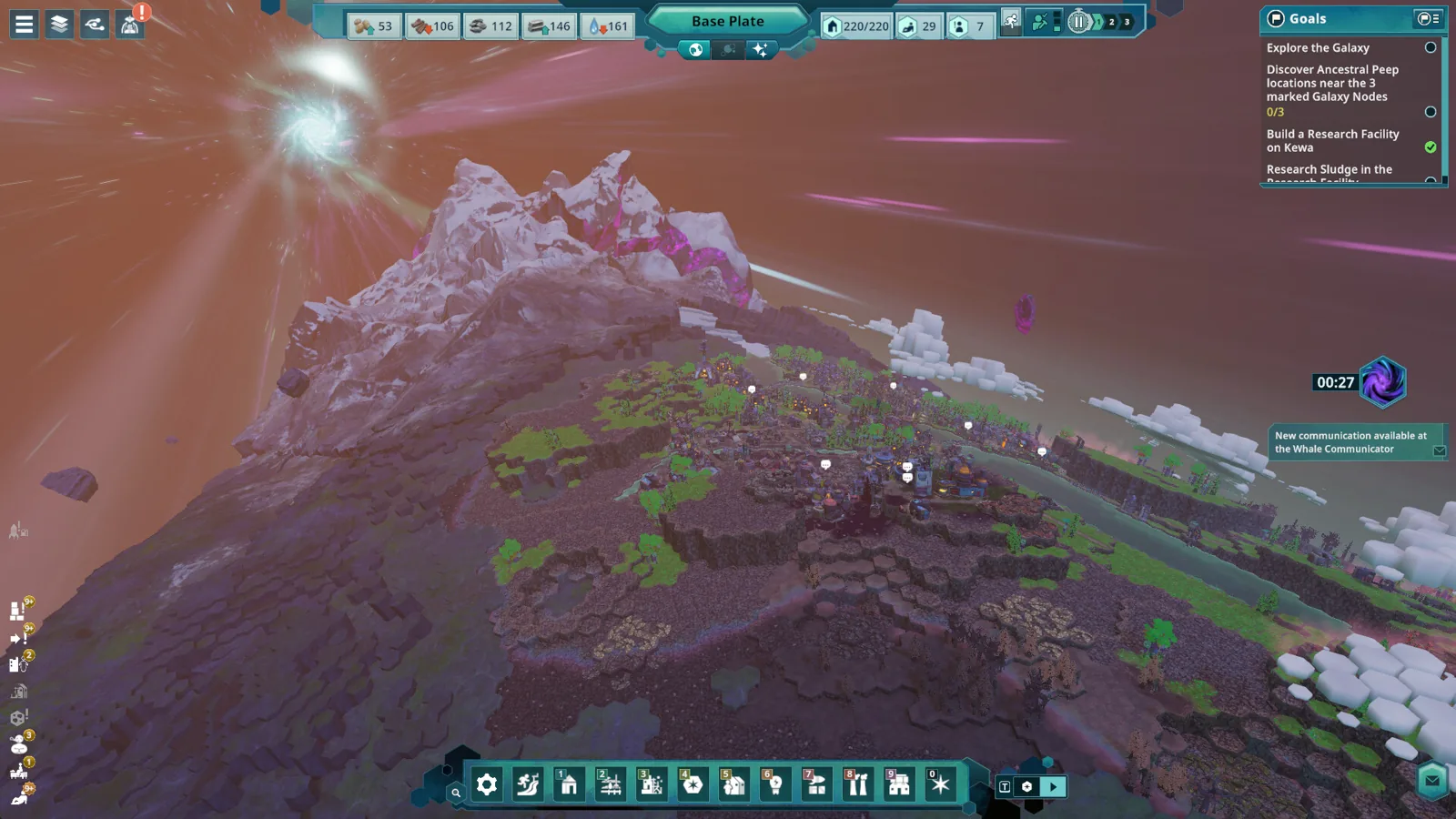
The map doesn’t open on day one. The July 20, 2026 dev blog on settleable planets puts it plainly: "Once you unlock the ability to travel with Kewa, you’ll gain access to the Galaxy Map." From there it starts partly hidden and reveals more as the journey continues, so your first route decisions are made on thin information — which is exactly why the scout ship earns its keep.
Each node is a star you can ask Kewa to swim to, and you can send the Scout Ship ahead with Jose to look around before the city moves. The same dev blog describes nodes as places you "can further investigate on your Scout Ship with Jose."
| What the scout finds | How to read it |
|---|---|
| Barren planet | Can’t support Peep life — but the star may hold something else, so don’t write the node off |
| Space junk and strange objects | Worth a look before you plan a stop around them |
| Trade station | Listed as a node type; the dev blog doesn’t detail it, so scout before building a plan on it |
| Aliens | Possible friends — meeting aliens is one of the features on the Steam page |
| Settleable planet | The prize: Peep-habitable, with resources Kewa’s plate can’t provide |
Reading a Planet Before You Commit
The dev blog walks through one featured world "somewhere in the ‘Neutral Sector,’ enjoying a moderate climate near a pleasantly warm sun." It works as a template for what a colony target should offer.
| What the featured world offers | Why it matters |
|---|---|
| Fertile land and clean ocean water | The basics a colony needs before anything else |
| Chickens and cows | The new Pasture building turns them into milk and eggs, widening Peep diets past potatoes |
| Berries and wheat | Food for Peeps, and wheat feeds the animals |
| Shells | Feed a cement chain |
| Trawler, Orchard, Pasture | Unlocked once you land, alongside the planet itself |
One caution: that’s a single example from the July 20 dev blog, not a promise that each settleable world is that generous. A fan guide on beyondthesestars.wiki reduces the decision to three reads — temperature, fertility and wildlife — which tracks the official example closely enough to use as a routine.
Sandbox Mode: build the planets yourself
If you’d rather test layouts than gamble on the map, the July 2, 2026 dev blog covers Sandbox Mode: you choose the planets, how many, which resources sit on them, plus biome and terrain. It also hands you on Kewa what Story Mode only offers on habitable worlds you discover out in the galaxy, which makes it a low-stakes way to rehearse an outpost supply chain.
Temperature, Stamina and Debris: the Travel Bill
Temperature is the slow tax. Stops differ in climate, and the dev blog warns you "have to be careful about staying too long in an area that's ‘too hot’ or ‘too cold’" — Peep mood and crop growth speed both react. A band that looks harmless for a quick mining stop can quietly wreck a farming plan.
Stamina is the sharp cost. "If Kewa is low on stamina, they will detour through debris fields to eat and regain their stamina," and that debris "can rain down on buildings, causing them to break, which means you’ll need to repair them to be able to continue production." A tired whale doesn’t just slow you down; it hands you a repair queue.
Mood is the wildcard. The August 12, 2026 dev blog says a long stay in a hot galaxy drags Kewa’s happiness down, and at the low end "they’ll initiate emergency travel to somewhere cold to cool down for a bit" — on their schedule, not yours. Healthy Kewa travels faster, and planting trees, cutting pollution and running rivers around settlements on the plate keeps the biome and the whale in better shape.
| What you notice | What’s happening | What to do about it |
|---|---|---|
| Kewa’s stamina dropping | A debris-field detour is coming | Keep food and spare materials banked for a repair pass |
| Broken buildings after a crossing | Debris hit the city and production stopped | Repair before starting anything new |
| Grumpy Peeps, slow crops | You’re parked in a bad temperature band | Move on, or plan the stop around it |
| Kewa swimming off on their own | Happiness fell too far in a hot region | Don’t schedule a big build at a hot stop |
Outposts: Running Two Economies at Once
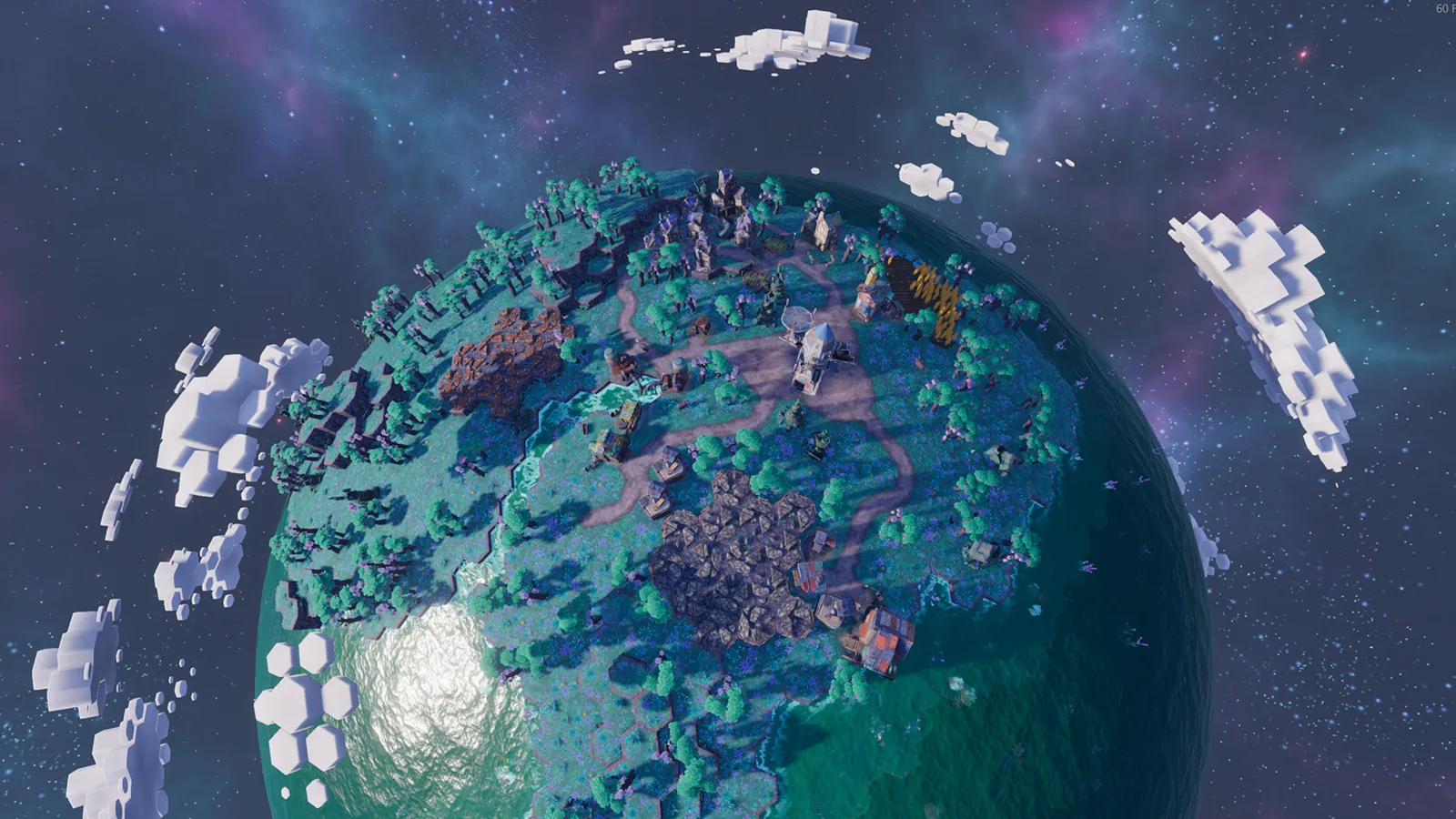
The Steam page’s "Reliable Outposts" section is the design statement: Kewa’s environment is "plentiful, but not without limits," there’s often "a dearth of essential resources and space," and you should make sure the environment isn’t over-exploited. The fix is to "create outposts on nearby planets and seek out supplementary sources of what you need."
The catch is timing. That same section says that unless you build a strong relationship with Kewa, it’s hard to predict how long you have at an outpost before Kewa decides it’s time to leave a system behind. The October 16, 2026 release post frames it the same way, describing outposts founded on other celestial bodies while the whale travels the galaxy.
| City on Kewa | Planet-side outpost | |
|---|---|---|
| Space | Tight | Room for what the plate can’t hold |
| Resources | What the biome supports | "new resources that you are unable to find on Kewa" |
| New buildings | Core industry | Landing on the featured world unlocked Pasture, Trawler and Orchard |
| Risk | Ecosystem can be over-exploited | Kewa may move on sooner than you’d like |
A fan guide on beyondthesestars.wiki describes Beyond These Stars planets and outposts as two economies running at once, and cautions against founding an outpost while the home city is mid-crisis — stabilise first, then venture. That lines up with the official note about unpredictable departures: an outpost you can’t supply is just a bill.
Before You Leave: a Five-Minute Checklist
- Scout the node with Jose before Kewa commits the city
- Match the temperature band to your crop plan and your Peeps’ current mood
- Bank food and spare building materials for a repair pass after a debris crossing
- Get the home city stable before founding an outpost
Two UI fixes from October 17, 2026
Early runs hit two small annoyances, both patched the day after launch. Hotfix #1 changed the range line on a selected Power Generator to show its power range instead of its pollution range, and Hotfix #2 stopped the New Game tutorial checkbox from switching itself back on if you turned it off and then opened Difficulty Settings.
FAQ
Do outposts replace production on Kewa?
No — they supplement it. The Steam page sends you out because of a shortage of resources and space, not to relocate the city. Planet-side output fills the gaps the whale’s back can’t.
How long can I stay at an outpost?
Hard to predict, by design. Without a strong relationship with Kewa, the Steam page says it’s difficult to know how long you have before Kewa decides to leave a system. Treat each outpost as temporary infrastructure.
What is the biggest mistake with Beyond These Stars planets and outposts?
Founding one while the home city is in crisis, and travelling without repair materials. Players report both — stabilise, stock up, then land.
Does temperature still matter after I land?
Yes. Crop growth speed and Peep mood track the temperature band, and hot regions drain Kewa’s happiness until emergency travel can cut the stay short.
Related Articles
Continue Reading
Peep Happiness and Strikes: 2026 Guide
Beyond These Stars peep happiness and strikes guide: strike goals, the three-shift timer, happiness modifiers, sickness, mourning and celebration bonuses.
Peep Sickness and Mourning Guide
Beyond These Stars peep sickness and mourning explained: energy thresholds, Apothecary recovery items, Memorial Statue bonuses, and a clear response order.
Peeps Guide: Happiness and Strikes
This Beyond These Stars peeps guide explains the daily shift cycle, energy and sickness, the +20% decoration bonus, strike goals and celebration perks.

Resources Guide: Rates and Chains
Home Spaceship output rates, the Woodcutter to Toolsmith handoff, by-product swaps and storage placement: a practical beyond these stars resources guide.

Buildings: Adjacency and Layout Guide
Planning your beyond these stars buildings with real adjacency bonus numbers, early placement rules and a step-by-step fix for stalled production chains.
demo: what it includes and where it ends
The Beyond These Stars demo is still on Steam after launch. See what the free slice includes, where v0.1.1369 ends, and the unlocks that trip players up.