
Beyond These Stars Resources Guide: Rates and Chains
Home Spaceship output rates, the Woodcutter to Toolsmith handoff, by-product swaps and storage placement: a practical beyond these stars resources guide.

Table of Contents
Wood, stone and iron arrive at 10 per minute from the Home Spaceship, water and potatoes at 3 per minute, and tools appear once wood and iron are stocked — that is the whole opening economy in Beyond These Stars, and you build none of it. This beyond these stars resources guide covers those panel numbers, the point where real buildings should take over, and the storage rules that keep a growing colony from stalling.
Timing matters more than the numbers themselves. The ship's output never scales, and the buildings that replace it also leave wood waste, soot and slag behind — materials later chains want. Hand off too early and you stall on wood; hand off too late and you have nothing to feed the chains that ask for residue.
Home Spaceship Output: The Full Panel
Open the ship's production tab in version 1.0 and it reads like a beginner's cheat sheet. Player notes at beyondthesestars.wiki list matching figures, which is a fair cross-check while you learn the layout.
| Output | Rate | What the panel tells you |
|---|---|---|
| Water | 3 per minute | Keeps arriving with nothing fed in, forever |
| Potatoes | 3 per minute | Same deal — no input, never runs dry |
| Wood | 10 per minute | Cut from trunks, so trees must sit inside range |
| Stone | 10 per minute | Worked from raw stone; a deposit always spawns near the landing |
| Iron | 10 per minute | Same story with raw ore and the landing deposit |
| Tools | Not listed | Show up once wood and iron are in stock |
Water and potatoes are the two lines that need no feeding, which is why thirst and hunger stay off your problem list early. Wood depends on trees standing inside the ship's working radius. Stone and iron both lean on the deposit that spawns beside the landing. Tools are the exception: no rate on the panel, only the condition that wood and iron must already be there.
Two properties of the ship are hard to replace later. It pollutes nothing, and it leaves nothing behind — no wood waste, no soot, no slag. Players who lean on that in the first hours often keep the toolsmith job running longest, because a clean toolsmith is otherwise expensive to match.
Spaceship or Real Buildings? What the Swap Costs
This is the comparison that matters most in any beyond these stars resources guide: the ship is free and clean, the real chain is quicker and dirty.
| Home Spaceship | Woodcutter, Ore Smelter, Toolsmith | |
|---|---|---|
| Wood, stone, iron | 10 per minute each | Faster, more efficient output |
| Pollution | None | The clean advantage disappears |
| Residue | Nothing left over | Wood waste, soot, slag |
| Inputs | Trees and deposits in range | Supplies you must haul and keep fed |
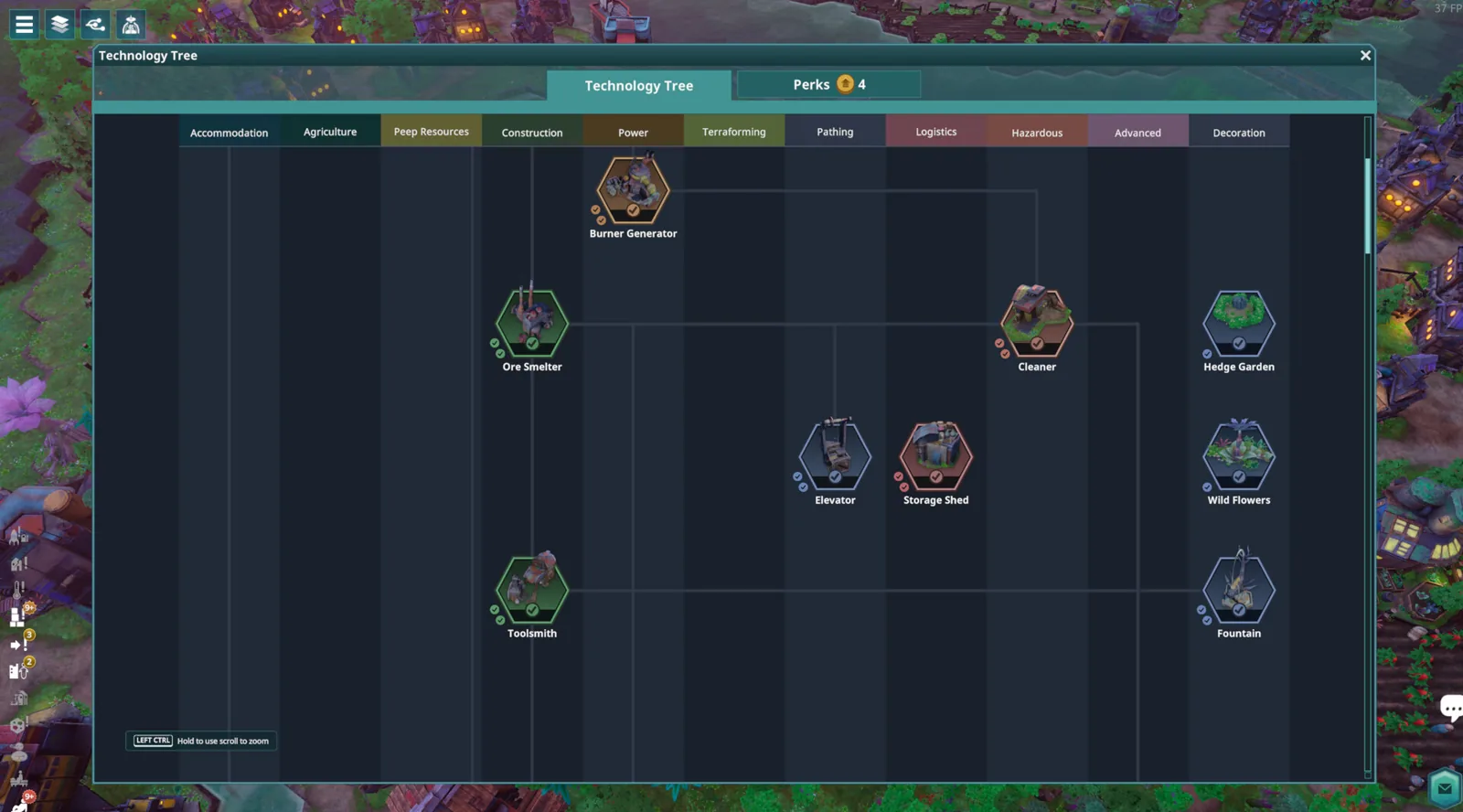
The three specialist buildings win on throughput, but they need inputs carried in and they leave residue behind. That residue is the reason to switch at all: when a later chain is hungry for slag, a ship producing only clean output cannot help you.
Player notes at beyondthesestars.wiki put a rough gate on the swap — all 30 of the starting crew housed across the first 15 huts, plus a School standing. Treat that as a player benchmark rather than a developer rule.
Deactivation works per job, not for the whole ship at once. If only one residue type is short, idle that single line and let the rest keep trickling.
Natural, Food and Synthesized Resources
| Layer | Examples | Notes |
|---|---|---|
| Natural | Wood, stone, iron; later copper, shell, crystal | Stone and iron deposits sit near the landing |
| Food and drink | Potatoes, milk, eggs, fruit, ocean catch | A better dish returns more energy per meal |
| Synthesized | Goods built from simpler inputs | Full list is not published in official material |
Stone and iron deposits near the landing are always there; copper, shell and crystal turn up as you push outward. The Steam store page calls Kewa's environment "plentiful, but not without limits" and warns of a "dearth of essential resources and space", which is why outposts belong in your resource plan rather than on the side.
Potatoes carry the opening hours, and a better dish returns more energy each time a Peep eats. Once you are planet-side, the Pasture brings in milk and eggs from animals, the Orchard supplies fruit, and the Trawler harvests the sea; wheat goes to the livestock, and shells feed into cement production. The 2026-07-20 dev blog describes a planet "rich with fertile land, clean ocean water" where landing unlocks "the Trawler and Orchard alongside the Pasture". That same post notes Peeps detour through debris fields to eat and regain stamina, and that falling debris can break buildings until you repair them — one more argument for keeping food close to home.
Wood is the one input you grow rather than find. Steam's "Reach Far and Wide" section says to "Plant trees to maintain a steady flow of raw materials, and maintain entire forests to help spread the atmosphere", so planting is a resource decision, not decoration.
The synthesized tier is where the paper trail runs thin: the full list of goods built from simpler inputs is not published in the official pages, so treat outside lists with suspicion. Steam's "A Fragile Equilibrium" section frames the same curve — "Prepare to seek out additional resources as you research new technologies and gain access to advanced goods."
Storage, Roads and the 16-Tile Rule
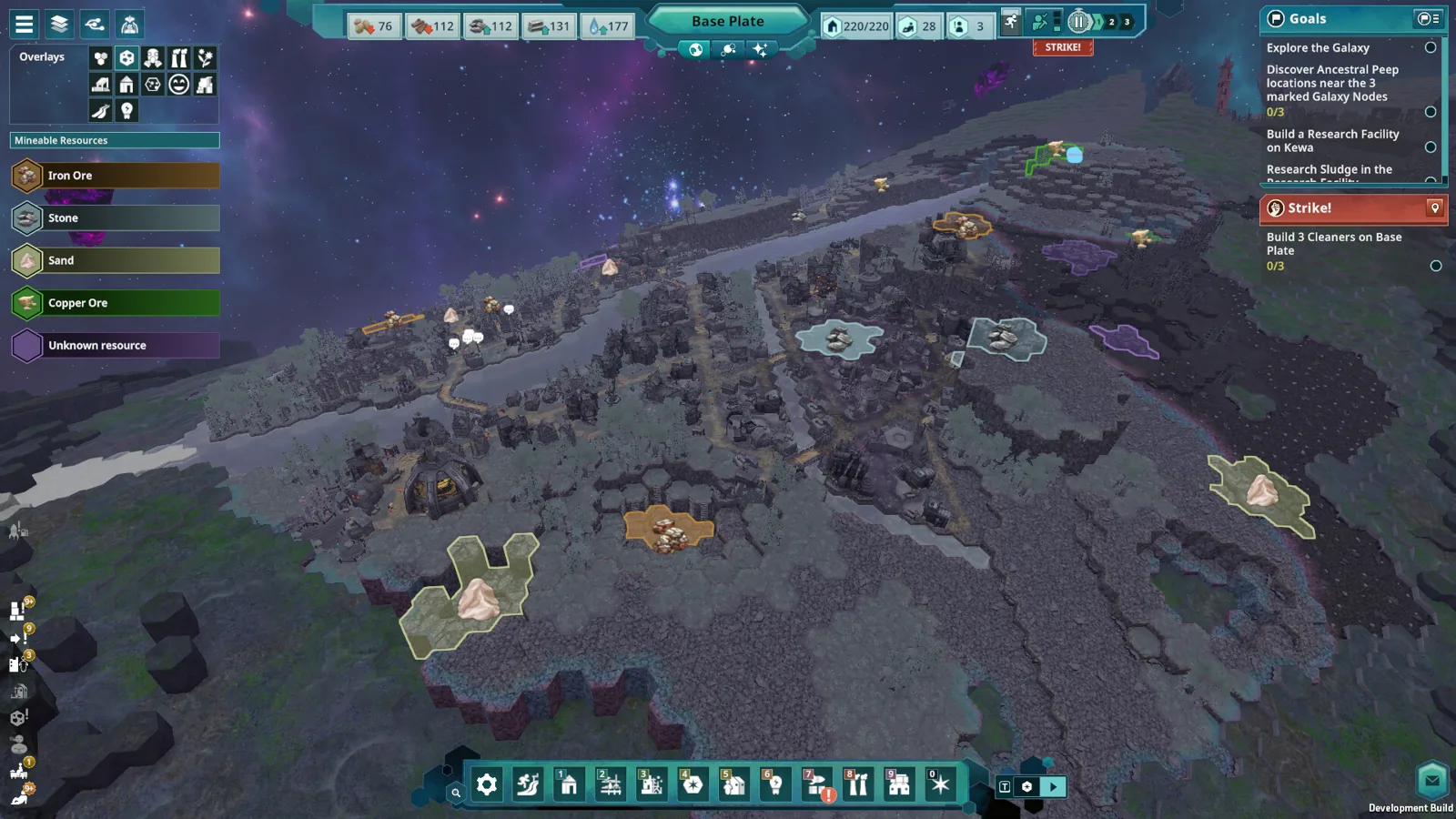
This is the section of a beyond these stars resources guide that usually gets skipped, and it is exactly where colonies quietly break. Peeps haul materials by hand rather than teleporting them, and they pull food and drink out of nearby storage into their homes, ready for the next break.
| Rule | What it changes | Example |
|---|---|---|
| Adjacency bonus | Storage and output | Water Pump gains 30% next to three water tiles |
| Forest bonus | Woodcutter output | +30% when placed inside forest |
| Road layout | Haul length | Shorter trips, more working time |
| 16-tile work rule | Which jobs a home can staff | Far-out homes cannot fill the post |
Treat those +30% numbers as economy upgrades rather than cosmetics. Roads decide how long each haul takes, and the 16-tile work rule decides which homes can staff which jobs.
One patch note is easy to misread. Hotfix #1 on 2026-10-17 changed the range line on a selected Power Generator to show "its Power range rather than its Pollution range", so the circle you see is coverage, not filth. Do not read it as a pollution map when you place industry near housing.
Pollution still carries a cost the top bar never shows. The 2026-08-12 dev blog says planting trees, minimising pollution and cutting rivers around settlements keeps Kewa healthy; a healthy whale travels faster, while an unhealthy one spawns Thorny Stems that work against your Peeps.
Early Supply Checklist
Five habits cover most of the opening. Tick them off as you go — the page remembers.
- Watch the top bar: wood or stone dropping means the ship is no longer keeping pace.
- Start the Woodcutter → Ore Smelter → Toolsmith line before you actually need it.
- Switch off spaceship jobs only for residue, or to free crew for something else.
- Put food storage next to housing; eating happens at home, and a home that runs dry recovers happiness slowly.
- A stalled chain reads backwards: the idle building is normally starving for an input rather than overworked.
That last habit saves the most time. A stalled chain looks like a busy building doing nothing, and the culprit sits one step upstream; walk back from the end product and the missing input usually surfaces fast.
Exact storage capacities, hauling speeds and the full synthesized list are not published in the official material, so be sceptical of precise numbers you find elsewhere. Everything here describes version 1.0, which launched on October 16, 2026.
FAQ
How much wood per minute does the Home Spaceship give me?
10 per minute from tree trunks, and it needs trees inside the ship's working range. Stone and iron also run at 10 per minute, while water and potatoes sit at 3 per minute with no inputs. Tools have no listed rate — they appear once wood and iron are stocked.
Should I turn the spaceship's production off?
Only when you need a residue type the ship cannot make, or when you want the crew for something else. The ship pollutes nothing and leaves nothing behind, so keeping it active is usually cheaper than replacing it early.
Which resources are not on Kewa?
Copper, shell and crystal show up on Kewa as you expand, per player notes at beyondthesestars.wiki. Beyond that, the 2026-07-20 dev blog says other stars hold planets with "new resources that you are unable to find on Kewa" — the exact list is not published.
Does sandbox mode change any of this?
It can. The 2026-07-02 dev blog says sandbox lets you choose which resources are available on Kewa, including "Sheep and Cows, or resource deposits", plus planet and terrain options and the choice to unlock buildings from the start. Handy for testing a layout without the early ramp.
Related Articles
Continue Reading
Peep Happiness and Strikes: 2026 Guide
Beyond These Stars peep happiness and strikes guide: strike goals, the three-shift timer, happiness modifiers, sickness, mourning and celebration bonuses.
Peep Sickness and Mourning Guide
Beyond These Stars peep sickness and mourning explained: energy thresholds, Apothecary recovery items, Memorial Statue bonuses, and a clear response order.
Peeps Guide: Happiness and Strikes
This Beyond These Stars peeps guide explains the daily shift cycle, energy and sickness, the +20% decoration bonus, strike goals and celebration perks.
planets and outposts: galaxy map guide
Beyond These Stars planets and outposts explained: scout with Jose, read temperature and fertility, and keep Kewa’s stamina up before you settle a colony.

Buildings: Adjacency and Layout Guide
Planning your beyond these stars buildings with real adjacency bonus numbers, early placement rules and a step-by-step fix for stalled production chains.
demo: what it includes and where it ends
The Beyond These Stars demo is still on Steam after launch. See what the free slice includes, where v0.1.1369 ends, and the unlocks that trip players up.