
Beyond These Stars Walkthrough: Practical Early-Game Route
Beyond These Stars walkthrough: pollution control, terraforming, tech-tree order, exploration and the common early-game sticking points players hit first.
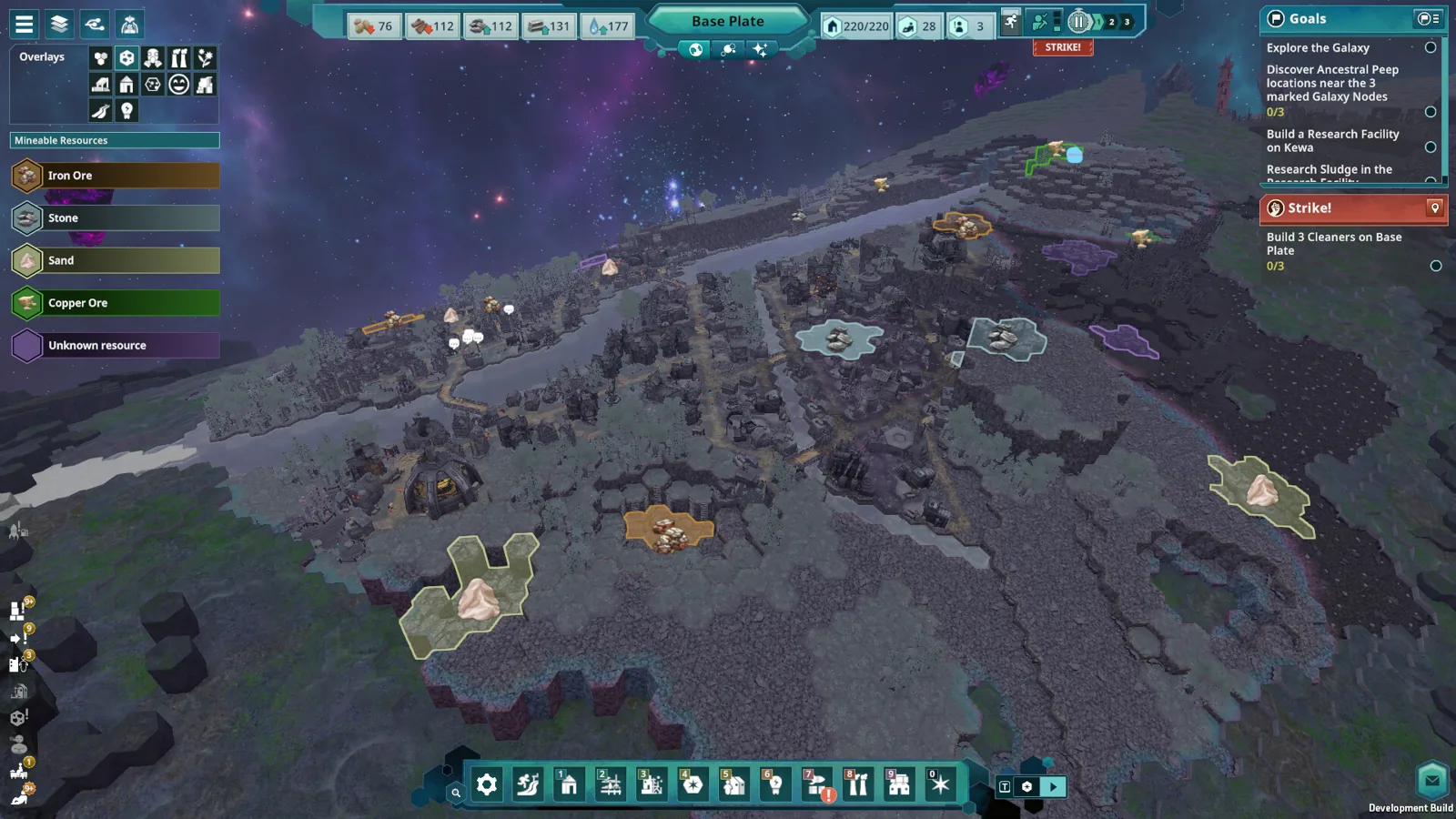
Table of Contents
The short answer
Beyond These Stars does not ship with a step-by-step campaign walkthrough. What the game's Steam hub does offer, as of 2026-10-17, is a Beginner's Guide covering settlement building, Peeps and Kewa care, terraforming, technology and perks — the right first stop if you want the developer's own framing. Beyond that, a workable "walkthrough" for this game is really a priority order: fix pollution and land access before you expand, let the tech tree pull you forward, and leave Kewa's back before your resources run dry.
This page organises what a player with roughly 30 hours across two colonies reported in the review video Before You Buy Beyond These Stars, Watch This Review, plus what the Steam store page and the Steam community hub say about the current build.
Before your first tile
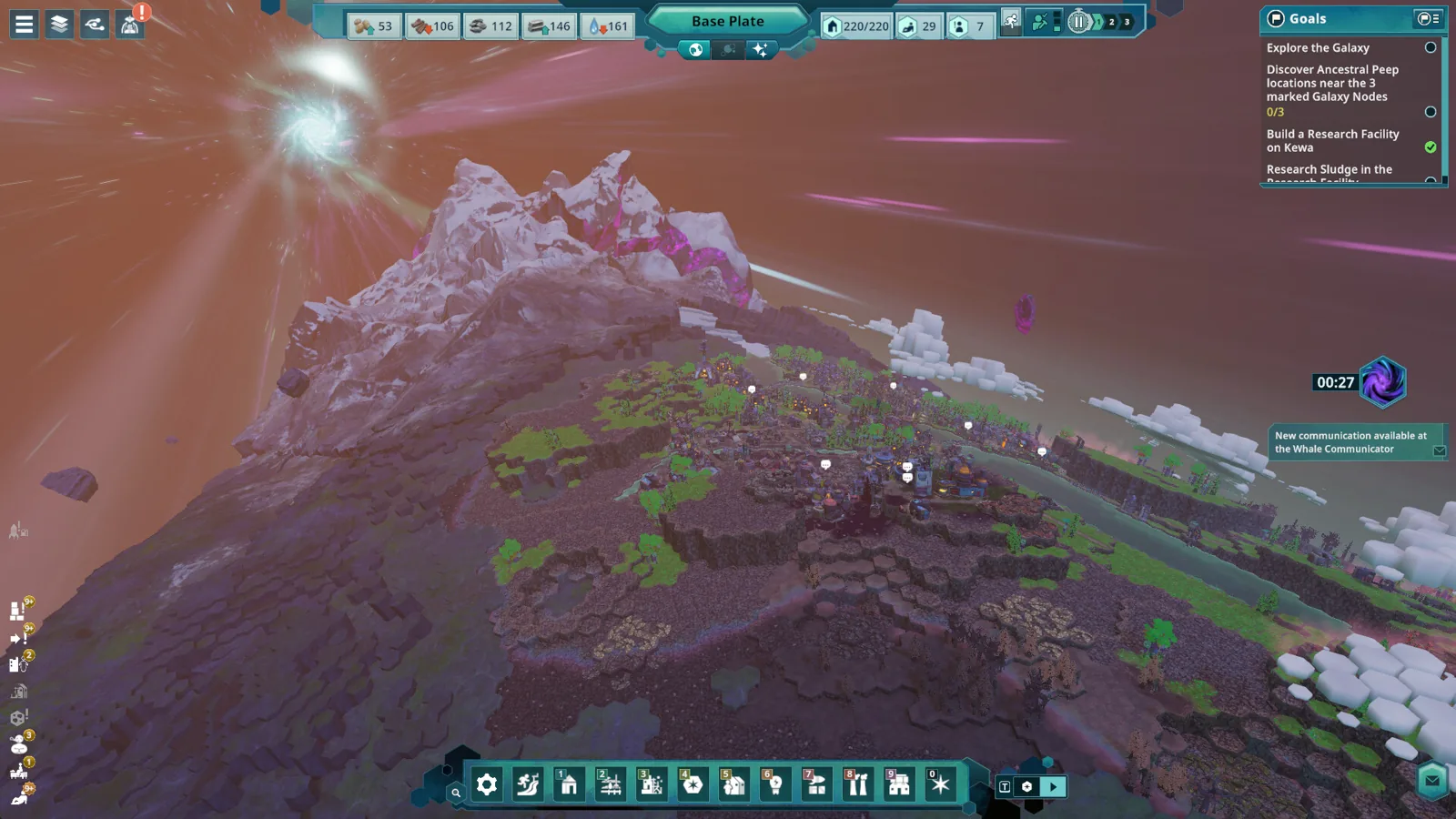
The store page lists adjustable difficulty, save-anytime, a mouse-only input option, and Steam Deck "Playable" status, and a demo is available — worth using if you want to feel the hex grid and building shapes before committing. The full release landed on 16 October 2026, with Hotfix #1 following on 17 October, so early guides and videos may describe a slightly older balance pass.
Priority one: pollution, not housing
The counterintuitive part of the early game is that pollution is a tighter constraint than food, water or housing. Burner generators for power and ore smelters for iron and soot all produce pollution while running; unchecked, it becomes toxic waste, and buildings swallowed by it stop working. Kewa is also unhappy about it.
Two tools keep it in check before you unlock terraforming:
- Trees absorb pollution. Ringing industrial buildings with forest is the main early lever.
- Cleaners handle tiles that slip through, but their range is short, so a tile just outside coverage can quietly become a problem.
Because of that, avoid one big industrial district. A spread-out network of small clusters, each wrapped in trees and served by a cleaner, is far easier to keep clean than a single dense zone — and it is the pattern the reviewer settled into.
Terraforming: three tools, one that matters most
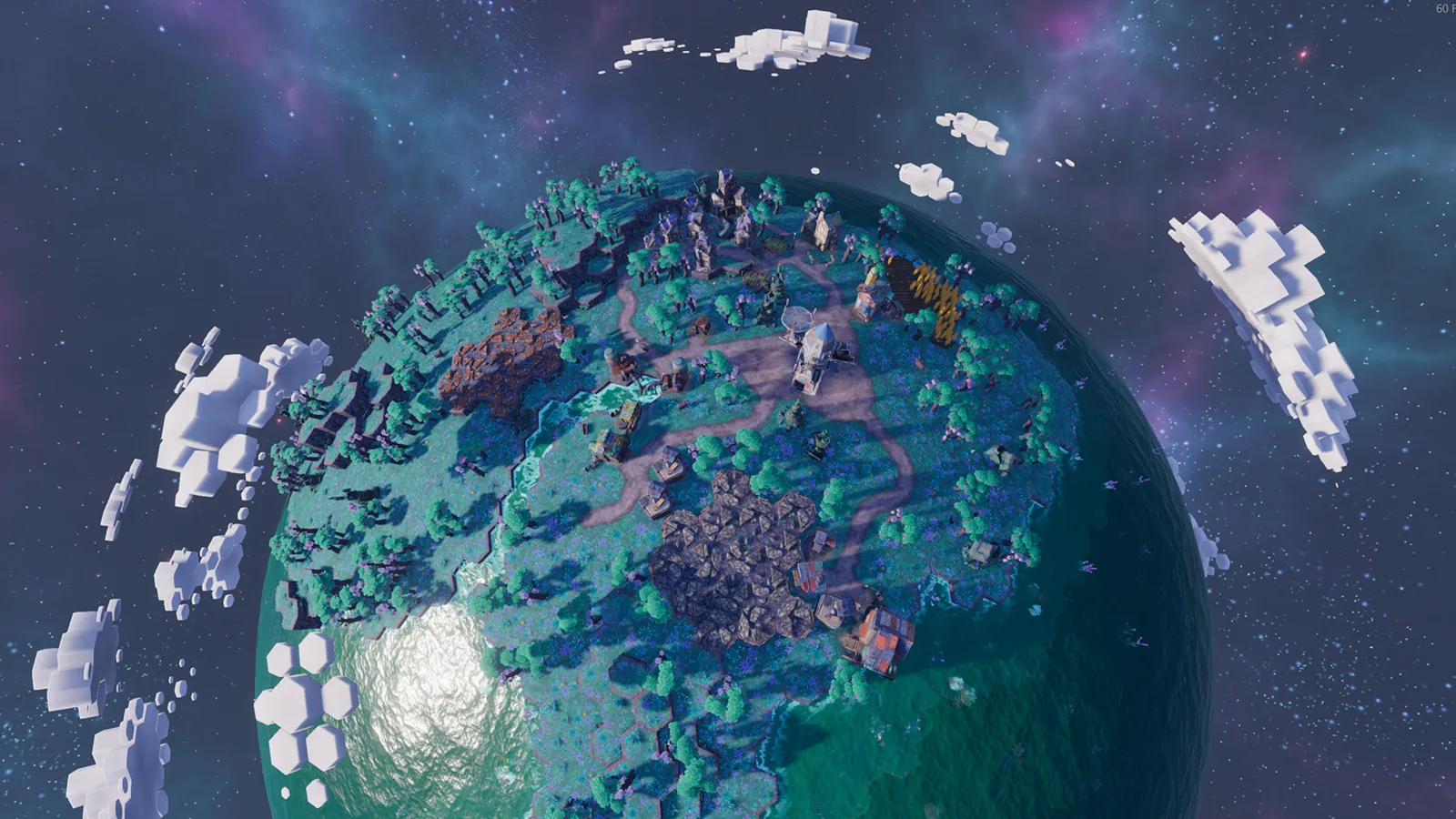
Terraforming has three basic features: landscaping (raise or lower terrain in a selected area), the composter (turns debris-covered land into fertile ground for trees or farming), and tree planting.
Landscaping is the one to learn first. Parts of Kewa's back are initially off-limits because there is not enough oxygen for Peeps to work there — a visible boundary line marks the limit. Lowering terrain lets water flow in, which expands the oxygenated area and opens up resource deposits you could previously only half-harvest. Do this as soon as a deposit you need sits partly outside the line, rather than waiting until you are short.
Let the tech tree drive your build order
The starting kit is deliberately thin — huts, potato patches, water pumps. Each new building's output unlocks the next link: an iron smelter feeds a toolsmith, the toolsmith's first batch of tools unlocks the sawmill, and so on down to hydroponic gardens and homesteads.
New buildings also grant perk points. Many perks are trade-offs rather than free upgrades — a perk that boosts plant growth in hot climates is a penalty in the cold regions you may currently be travelling through — while a few, such as faster production or larger trade-ship storage, are pure gains. Spend on what your current situation needs; you cannot fill the tree at once.
Exploration is part of the route, not a side activity
Kewa's back has limited resources. Once you are out of space or missing a resource, the answer is terraforming or travelling to another planet.
- Debris fields are risky: Kewa can eat asteroids to recover energy, but some will hit your colony and cause damage.
- Habitable planets advance the story and hand over concrete rewards — new animals (sheep on a tundra world, for example, for heavier cold-weather clothing), new seeds such as wheat, cotton or pears, and sometimes new buildings.
- Crops compete. Planting pears where you grew berries carries a penalty if you try to run both; switch one off and let production swap over.
A practical consequence: keep the home colony reasonably self-sufficient and trade for the handful of resources you cannot produce, because you will eventually leave a planet behind to continue the story.
Adjacency is where the min-maxing lives
Adjacency effects can be positive or negative, and the game rarely lets you have everything:
- Potato patches placed near each other gain storage but lose production — space them out if you need potatoes now, cluster them if you want to stockpile without a warehouse.
- A water pump next to a potato patch speeds production.
- Houses near potato patches make Peeps happier; houses near other houses add storage but reduce happiness; nearby huts fit more Peeps per house at an energy cost.
- A chemical factory next to a cement factory may generate extra resources but adds pollution — often worth deliberately avoiding.
- Underwater tiles slow production and reduce pollution; burner generators like empty tiles, running a little below peak but polluting less.
Common sticking points
The Steam hub shows the questions new players actually ask: whether huts can be upgraded to houses without demolishing them, how to keep up with soot demand before chemicals, why landscapers are not taking composting jobs, and how to connect a burner generator to an ore smelter for the tutorial's power step. These are open player threads rather than confirmed answers, so treat replies as advice.
A few things that are documented:
- Moving buildings. For a short move, start the move and raise its priority so Peeps get to it. For a long move, deconstruct instead — you get materials back and can rebuild. Hotfix #1 on 17 October 2026 fixed a case where a move could stall if Peeps cancelled while fetching resources.
- Power overlays. The same hotfix changed the range line shown when selecting a Power Generator to display its power range rather than its pollution range, which is worth knowing if you were reading that overlay as a connection guide.
- Stuck production buildings. The reviewer's workaround on a pre-release copy was to save and reload; some bugs seen then may already be fixed in the release build, so try a reload before assuming a hard block.
If a tutorial step looks impossible, check the objective's overlay first — the hotfix suggests range displays were previously misleading in at least one place.
Where to go next
Once pollution is stable and terraforming has opened your map, the loop becomes: unlock a building, spend perks on the trade-off that fits your current region, explore for the seed or resource you lack, and keep Kewa healthy enough that it does not need to detour into a debris field to heal. For the basics in the developer's own words, start with the Beginner's Guide linked from the Steam hub.
Related Articles
Continue Reading

Beginner Guide: Your First Hours
Practical early-game orientation for Beyond These Stars: tutorial pacing, soot and pollution trouble, Kewa care, and where to find the official starter guide.
Guide: Surviving Your First Colony
A practical Beyond These Stars guide to pollution control, adjacency effects, terraforming, tech unlocks, perks and exploring the galaxy on Kewa.
Space Whale: What Kewa Really Is
Kewa is the sentient space whale your city rides in Beyond These Stars. What the whale does in play, how the relationship works, and why it isn't a warship.
Tips: Colony and Kewa Basics
Practical early-game tips for Beyond These Stars: waste control, terraforming, forests, adjacency, Kewa's mood, perks, travel, and outposts.

Buildings: A Practical Overview
What Beyond These Stars players can expect from buildings at launch: moving them, power and pollution ranges, soot, compost, and outposts.
City Building: A Practical Start
How city building works on Kewa's back in Beyond These Stars, with early layout, power, pollution and supply-chain tips from launch-week reports.