
Beyond These Stars Tips: Colony and Kewa Basics
Practical early-game tips for Beyond These Stars: waste control, terraforming, forests, adjacency, Kewa's mood, perks, travel, and outposts.
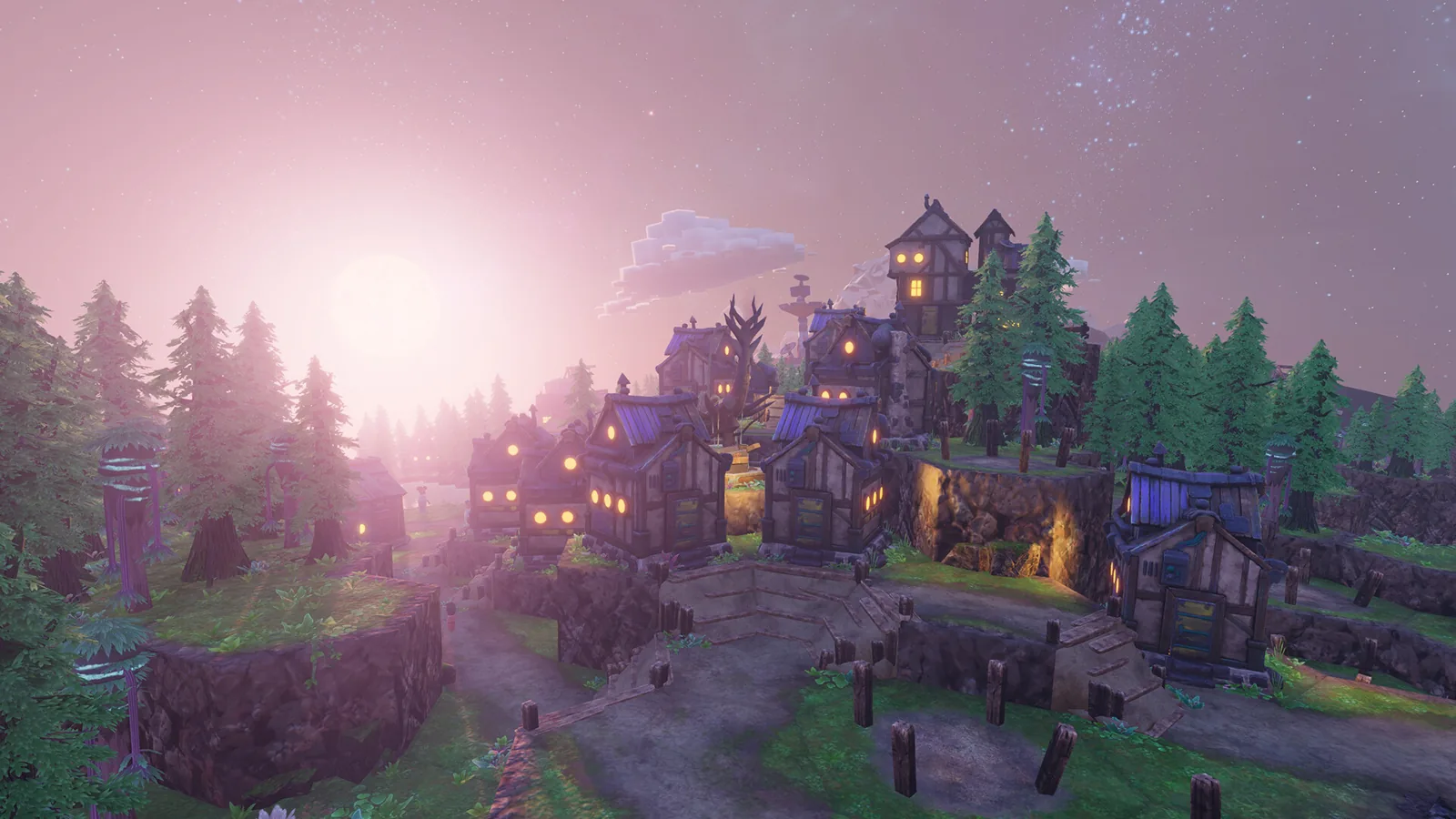
Table of Contents
Beyond These Stars puts a whole settlement on the back of a living space whale, so the useful tips are less about perfect ratios and more about stopping small problems from spreading. Waste, polluted ground, and Kewa’s mood all feed into each other. The advice below focuses on the early and mid game: what to build first, how to shape the terrain, and how to keep the whale willing to carry you.
The game reached 1.0 on October 16, 2026, according to the Steam Community announcement. The same hub points new players to an official Beginner’s Guide covering settlement building, Peeps, Kewa, terraforming, technology, and perks.
Quick start: five habits that matter most
- Put a storage shed for waste next to your industrial buildings, and unlock cleaners when they appear.
- Treat terraforming as a building tool, not decoration: level ground and connect isolated patches.
- Plant forest belts between factories and housing; they spread breathable air and buffer pollution.
- Check Kewa’s health and mood before you add another polluting building.
- Pause before you redraw roads, bridges, or elevators so workers do not get stranded.
Keep waste from becoming a silent bottleneck
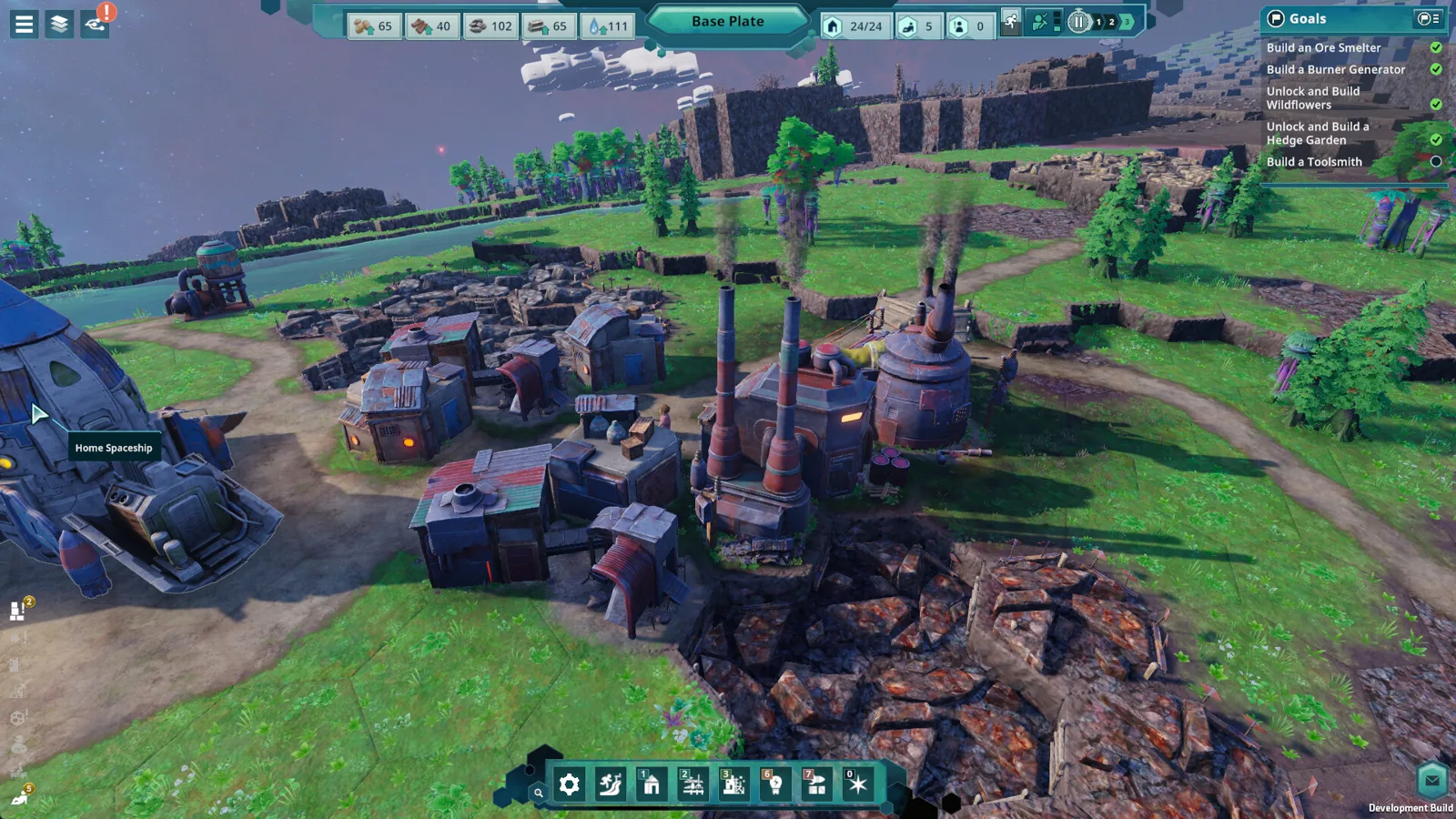
Production buildings create byproducts: burner generators leave soot, smelters leave slag, woodcutters leave wood waste, and digging leaves debris. If those piles are ignored, tiles can turn toxic, Peeps lose happiness when they cross polluted ground, and a building whose internal waste storage fills can stop working and freeze the chain around it.
The practical routine is to give industry a dedicated waste depot, check storage before adding another generator or smelter, and take cleaners when the research tree offers them. A player-made 10 Advanced Tips video calls early trash management the biggest factor in avoiding a colony collapse; that is one experienced player’s assessment, not a difficulty setting.
Shape the ground instead of building around it
Terraforming is easy to underestimate. Lowering a hex produces rubble that can be used to raise another hex, so you can level awkward ground, bridge gaps between districts, and turn natural barriers into usable space. Channels can be dug for water, and topsoil can be added for agriculture or forests. The player video’s author uses this constantly to avoid rebuilding around terrain; the available tools expand as you progress, so check what the current job allows before planning a large district.

Plant forests for air, not just wood
Forests do more than supply wood. Players report that tree cover spreads breathable atmosphere onto new hexes, which is what lets the settlement grow outward, and that dense belts between industry and housing help absorb pollution. A forest belt is therefore a planning tool: run it toward the next residential area before you build there, and keep some green space between smelters and homes rather than clearing everything for production.
Use adjacency cards and leave breathing room
Buildings have adjacency cards that show how neighbors change their output and storage before you place them. A common player pattern is to put housing near potato fields for a mood bonus, and to group houses for local storage and distribution benefits. The trap is overcrowding: packing farms, houses, and storage into one block can create logistics bottlenecks and a crowded feeling. Plan small districts with clear paths rather than a single dense maze.
Treat Kewa as a resource with a mood
Kewa has health, mood, energy, and temperature. The same trees, rivers, and low pollution that make your town livable also support the whale, while generators and smelters work against it. A healthy, happy Kewa travels faster and can produce helpful growth like fruit trees; a neglected Kewa can grow thorny stems, move on earlier than you planned, or change the story’s ending. The Whale Communicator lets you talk to Kewa, and conversations can open up as its health changes.
Travel is framed as a request rather than direct steering: you choose a destination and ask Kewa to go, and Kewa’s mood can override the plan. Before expanding industry, check the whale’s status and decide whether the extra output is worth the ecological cost.
Spend perk points like a government
The passive skill tree is easy to treat as a stat shop, but its three branches pull in different directions: pollution and happiness, productivity, and warehouse storage. Points are limited, so the useful habit is to choose a style before spending the first point. A clean colony invests in pollution and happiness; a heavy-industry colony invests in storage and productivity so factories do not stall on their own waste. Mixing without a plan tends to leave you with the costs of both approaches and the benefits of neither.
Pause before changing the transport network
Roads, bridges, and elevators are the colony’s circulation. If you cut a path or change elevation while the game is running, Peeps can be left without a route and deliveries can stop without an obvious warning. The player video recommends pausing before major transport edits, tracing where resources come from and go, and then making the change in one go. That is a routine, not a required button sequence; the point is to avoid rebuilding a route while workers are mid-trip.
Use outposts and trade to cover specific gaps
Local deposits on Kewa are finite, so outposts are better treated as planned extensions than as an emergency fallback. Scan for the materials your economy is short of, and set up an outpost before the last local reserve is gone. The same logic applies to aliens: trade and quests are most useful when they solve a current bottleneck, not when they simply offer a shiny technology you cannot use yet. Players also report that other species notice how you treat Kewa, so diplomacy and colony management are not separate tracks.
Watch the travel clock
Kewa moves between star systems on its own schedule. When you arrive somewhere new, the useful window is limited: send probes, check ancient planets, and secure rare resources before the whale moves on. Kewa’s mood affects how long it stays, so a stressed or polluted whale can cut an exploration stop short. A practical rhythm is to do heavy urban redesign while in transit and save the arrival window for exploration and outpost work.
When a chain stalls
If a production building stops, check the simple causes first: whether its waste storage is full, whether it has workers, and whether it is actually connected to power. Steam discussions from launch week include players confused by generator-to-smelter power connections and by slow soot production, so it is worth checking the building’s information and the relevant power view before demolishing anything. These are general troubleshooting steps, not confirmed fixes for every build.
Version note
If you are playing the free demo instead of the 1.0 release, a player overview describes it as an older slice without planets, the galaxy map, aliens, or an ending. The outpost and travel advice here only becomes relevant in the full release; the waste, terraforming, and Kewa basics are still useful for learning the rhythm.
Bottom line
The strongest early habit is to build in loops: industry creates waste, waste needs storage and cleanup, cleanup protects Peeps and Kewa, and a healthy Kewa gives you more time to explore. The Steam Community hub is the place to check launch patches and the Beginner’s Guide link; the 10 Advanced Tips video is a useful player-level walkthrough of the routines above.
Related Articles
Continue Reading
Guide: Surviving Your First Colony
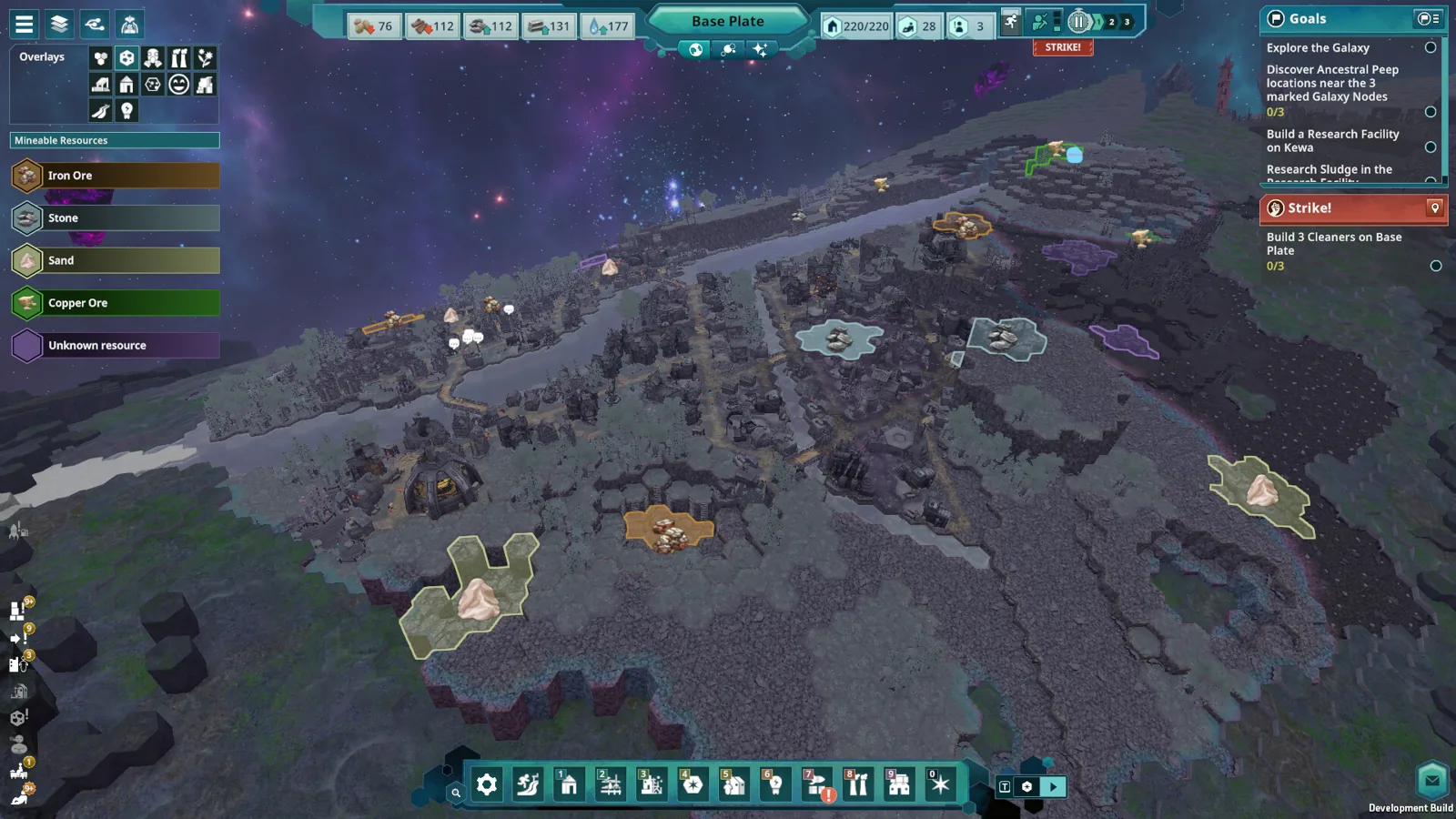
A practical Beyond These Stars guide to pollution control, adjacency effects, terraforming, tech unlocks, perks and exploring the galaxy on Kewa.
Space Whale: What Kewa Really Is
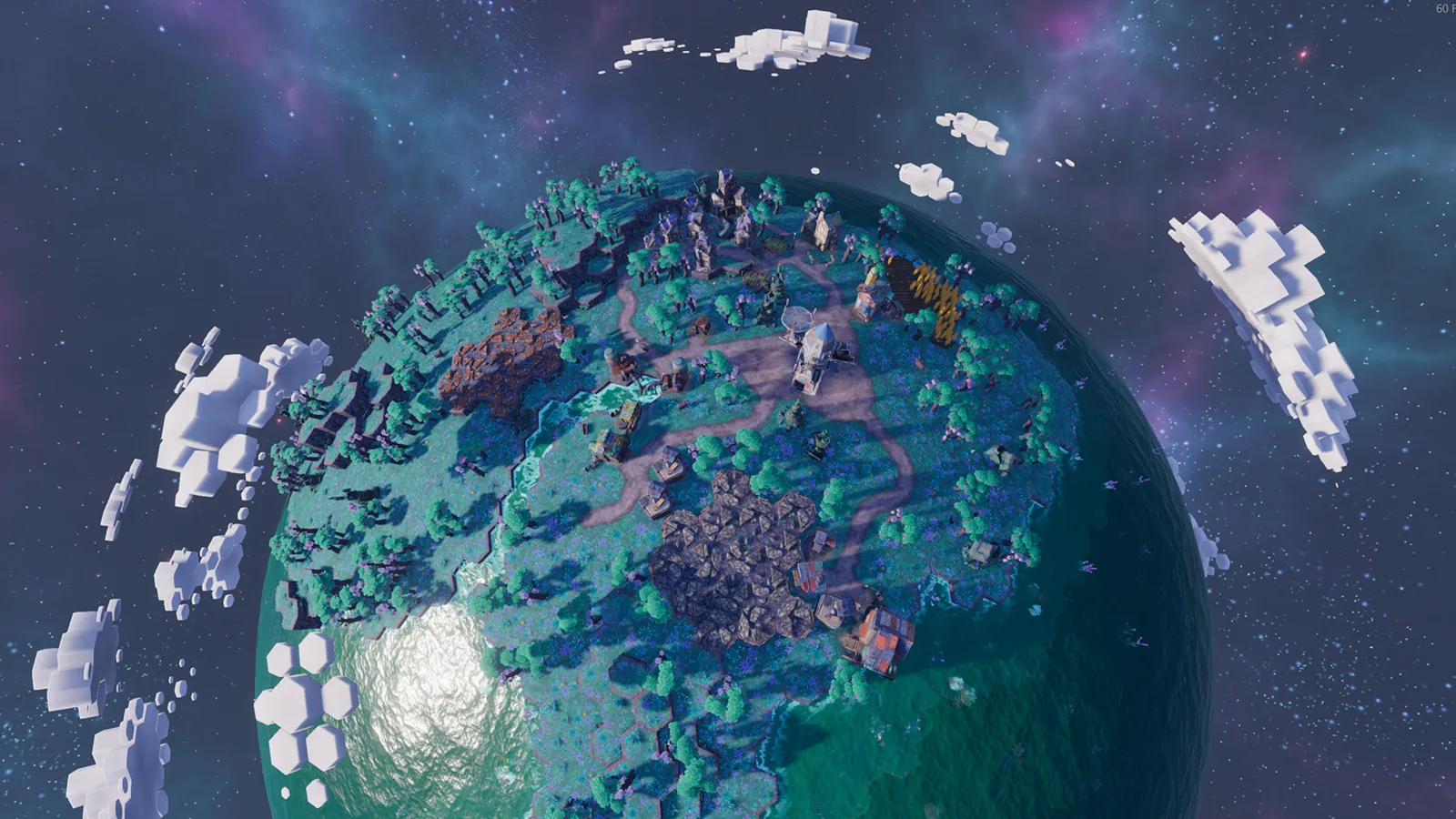
Kewa is the sentient space whale your city rides in Beyond These Stars. What the whale does in play, how the relationship works, and why it isn't a warship.

Beginner Guide: Your First Hours
Practical early-game orientation for Beyond These Stars: tutorial pacing, soot and pollution trouble, Kewa care, and where to find the official starter guide.
Walkthrough: Practical Early-Game Route
Beyond These Stars walkthrough: pollution control, terraforming, tech-tree order, exploration and the common early-game sticking points players hit first.
Demo: What It Is and How to Play
Yes, Beyond These Stars has a free demo on Steam, first released in June 2024 and updated in late 2025. Here's what it covers and how to find it.
Sandbox Mode: Toggles and Setup
A community first look at Beyond These Stars sandbox mode: unlock-all-buildings, instant construction, difficulty sliders, and how it differs from story.